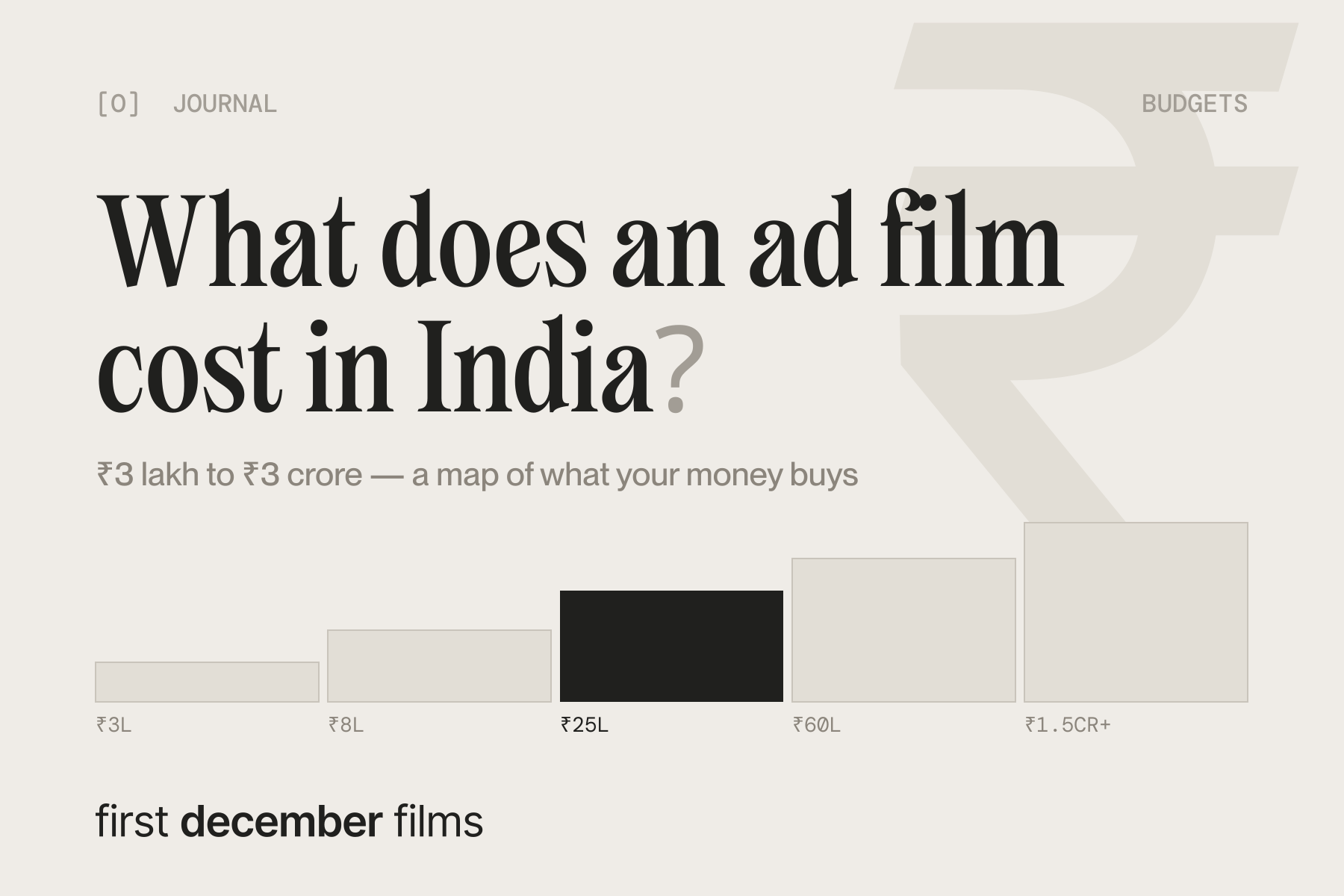
The short answer. In India in 2026, a professionally produced ad film costs between ₹3 lakh and ₹3 crore. A national TVC built to broadcast standard usually starts around ₹25 lakh. Add a mainstream celebrity and the production alone starts near ₹75 lakh, before the endorsement fee. A flagship film, the kind a brand runs for three years and enters into awards, sits between ₹1 crore and ₹2 crore.
That range is almost uselessly wide. Which is exactly why every brand asks the question and almost nobody answers it properly.
So here is the honest version. Not a price list, because no production house can honestly give you one. A map of what your money buys at each tier, what changes when you move up, and where budgets quietly break.
First, production cost is not media cost
This is the single most common budgeting mistake, and it derails more campaigns than any creative decision.
Production cost is what it takes to make the film. Script, director, crew, cast, locations, equipment, post.
Media cost is what it takes to put the film in front of people. Television airtime, YouTube, connected TV, cinema, print adaptations.
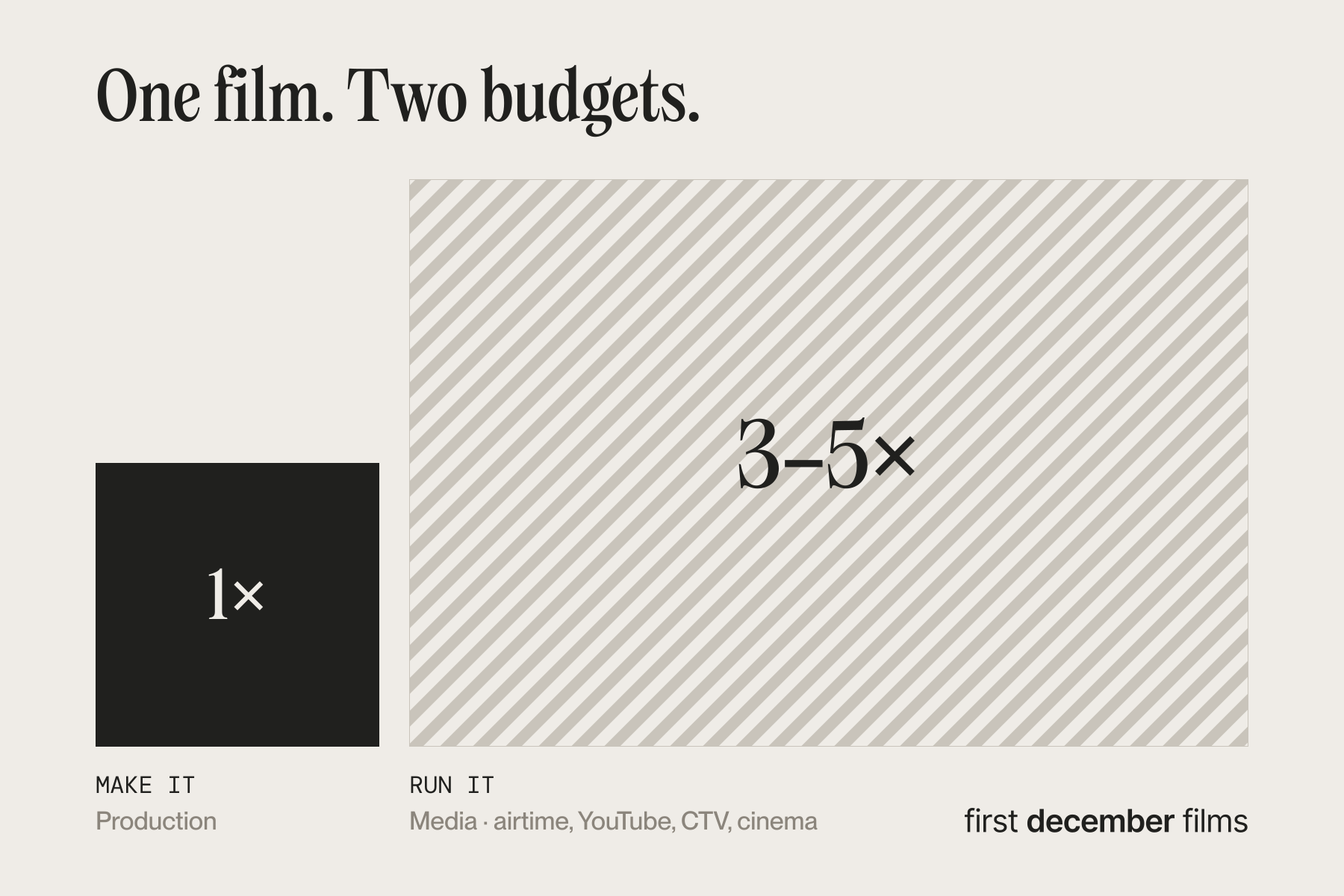
They are separate budgets, negotiated with separate people, and media is almost always the larger of the two. A ₹40 lakh film running a serious national television campaign will spend several times that on airtime. Brands that budget only for production consistently end up with a film they cannot afford to run.
Everything below refers to production cost only.
The four buckets every rupee lands in
Ignore the line item count on a quote. Every ad film budget in India, at every tier, sorts into four buckets. Learn these and you can sanity check any quote from any house.
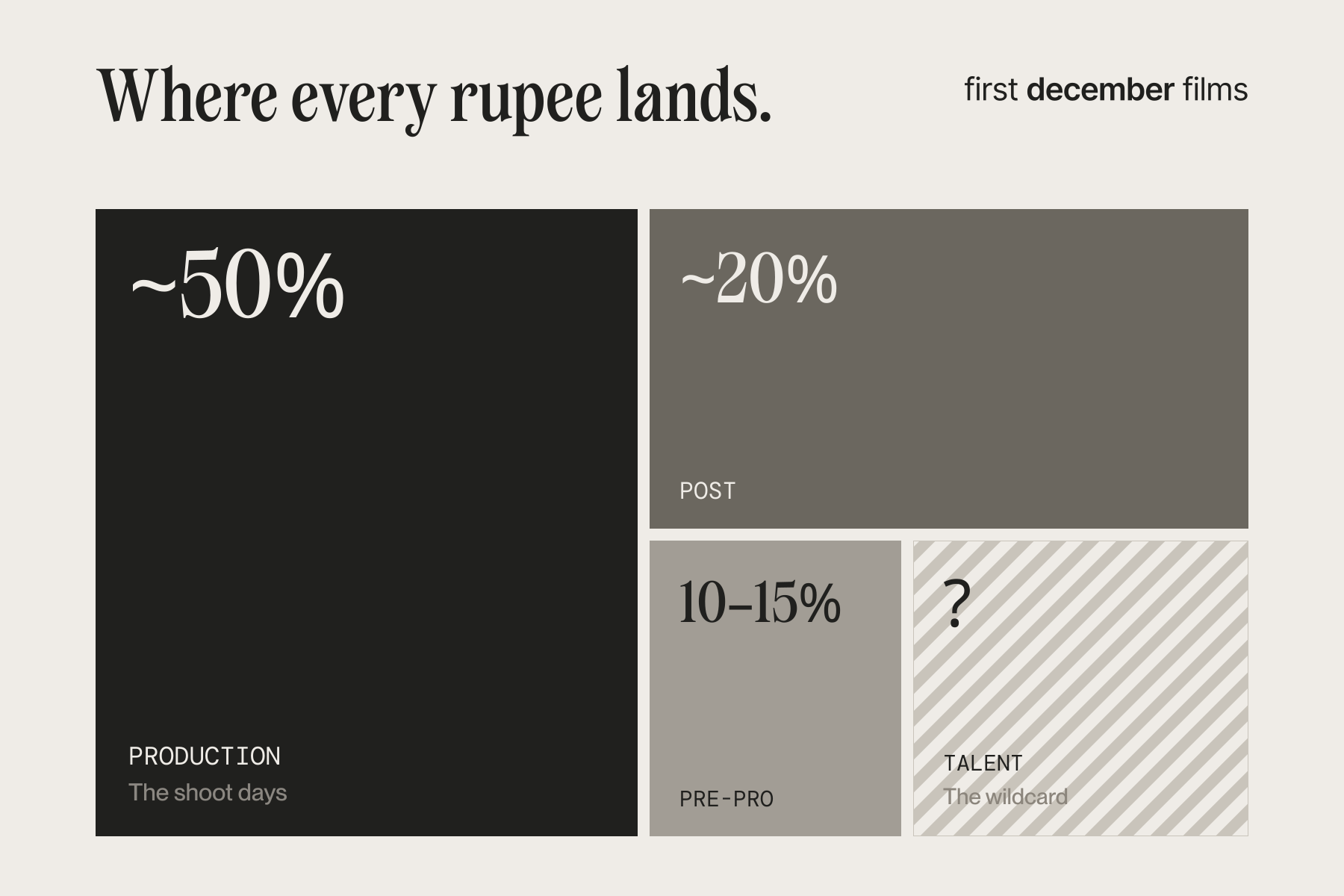
- Pre-production. Script development, director's treatment, storyboarding, casting, location recce, permissions, wardrobe, art design, scheduling. Usually 10 to 15 percent of the budget. It is the worst place to save money and the most common place brands try.
- Production. The shoot days themselves. Crew, camera and lens package, lighting, grip, art and set construction, transport, food, insurance. This is the largest bucket. One extra shoot day is never a small bump. It is a full crew day.
- Post-production. Offline edit, online conform, colour grade, sound design, music, VFX, versioning and delivery. A clean two-location film is light. A VFX or tabletop film is a different category entirely.
- Talent. The wildcard. A strong working actor is one number. A regional face is another. A national celebrity can cost more than the rest of the film combined.
The tiers, and what each one actually buys
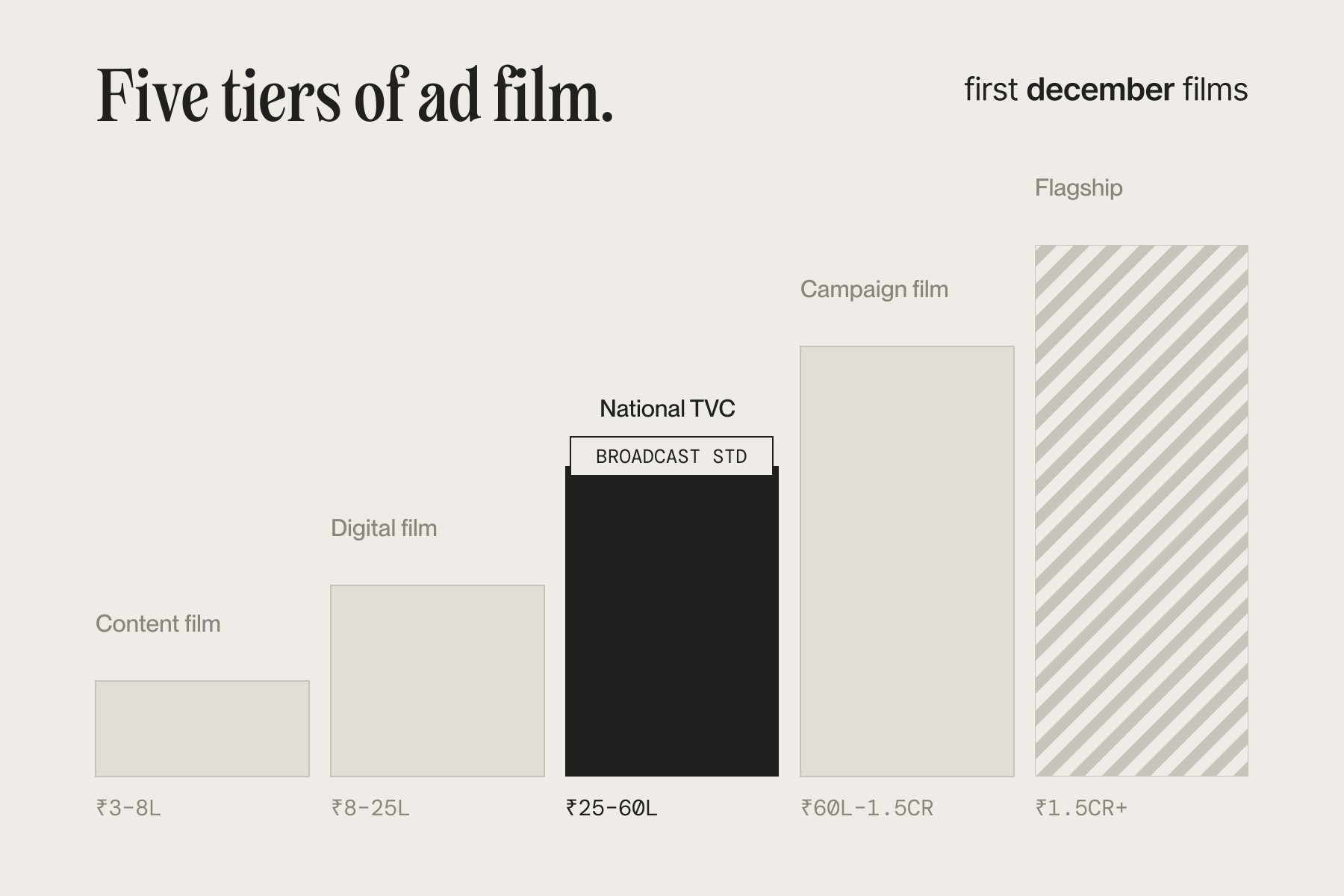
₹3 lakh to ₹8 lakh: the content film
A small crew, one location, one shoot day, a mid-tier camera package, minimal lighting, non-professional or emerging talent, a clean edit and a stock music track. This tier makes perfectly good social content. It does not make a TVC. Anyone selling you a "TV commercial" at this number is selling you a corporate video with a different label on it.
₹8 lakh to ₹25 lakh: the serious digital film
A proper director, a proper DOP, one to two shoot days, a real crew, professional casting, art direction that holds up in close-up, a considered grade and original or licensed music. This tier produces genuinely good digital films and lower-budget regional TVCs. It is where most Indian brands should start if they have never made a film before.
₹25 lakh to ₹60 lakh: the national TVC
Broadcast standard. Two to four shoot days, a full crew of forty to eighty people, cinema-grade camera and lens packages, built sets or premium practical locations, casting from a real shortlist rather than the first three available faces, and a post pipeline where the grade and sound are done by specialists rather than the editor. Multiple language versions are usually built in here. This is the working tier for most Indian national campaigns.
₹60 lakh to ₹1.5 crore: the campaign film
The film your brand is known by. International or difficult locations, a large art department, complex choreography or action, a director with a track record you can point to, real VFX rather than clean-up, an original score. Often a celebrity, often multiple films shot as a series across the same schedule to bring the per-film cost down.
₹1.5 crore and above: the flagship
A film that competes internationally. This is where the constraints come off the craft and go onto the calendar instead. A-list talent, multi-country shoots, specialist crew flown in, weeks rather than days in post. Nike's Make Every Yard Count lives in this territory. It went on to become the most awarded film ever made out of Asia, with over fifty international awards including a record seven Cannes Lions, three One Show Gold Pencils and six D&AD pencils.
Very few Indian brands need this tier. The ones that do usually know it already.
What actually changes when you move up a tier
Here is the part nobody writes down, because it is uncomfortable to say out loud.
Moving from ₹10 lakh to ₹40 lakh does not buy you a better camera. Cameras have been good enough for a decade. Every tier above ₹8 lakh is shooting on equipment that is technically capable of a national campaign.
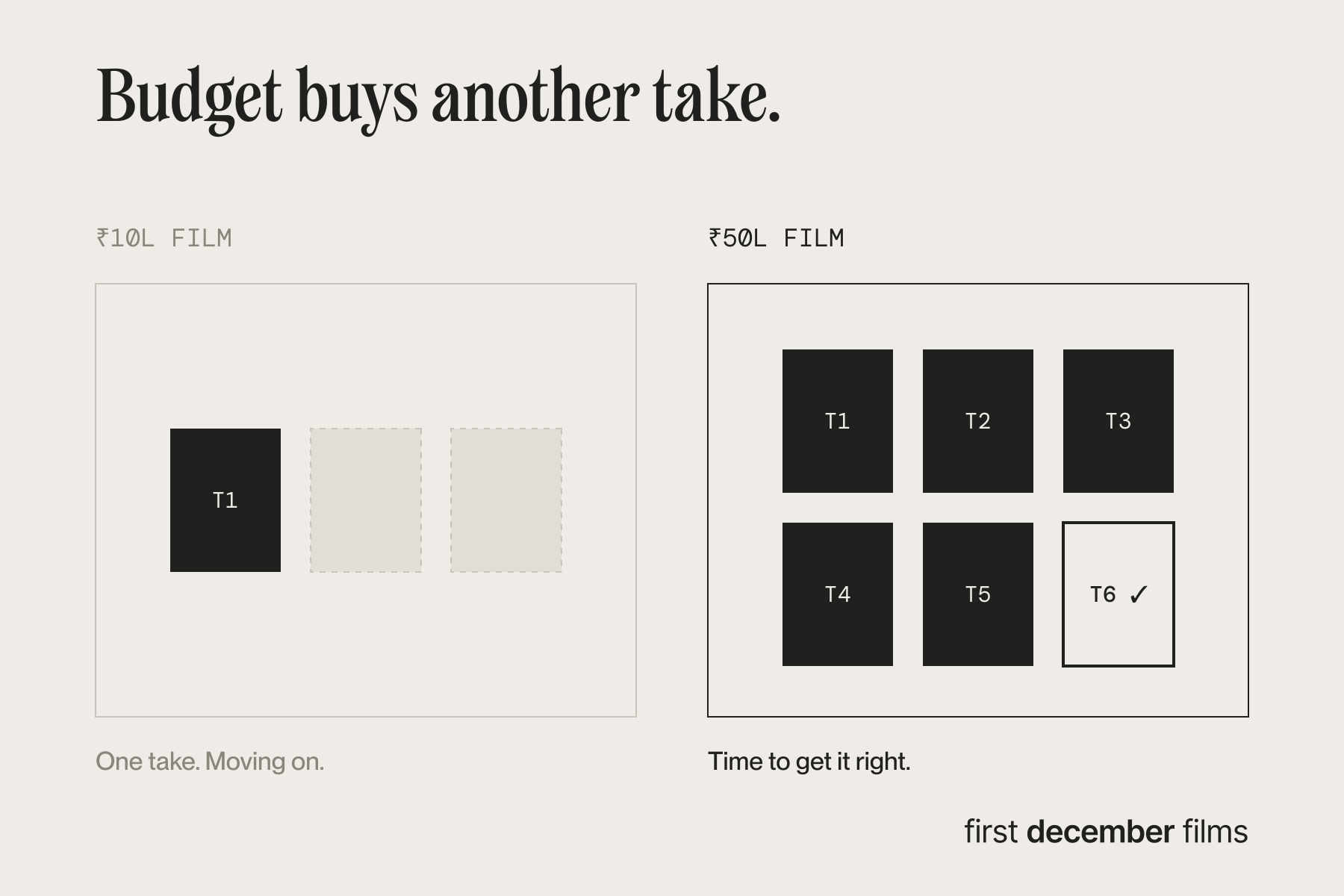
What a higher budget buys is control.
- Time to prepare. A recce that finds the right location instead of the available one. A casting session that sees eighty people instead of eight.
- The right people, not the free ones. The DOP who has lit that specific kind of skin in that specific kind of light before. The food stylist who knows what happens to that product under a key light at 2pm.
- Room on the schedule. The single biggest quality difference between a ₹10 lakh film and a ₹50 lakh film is that the second one has time to do a take again.
- A post pipeline, not a post person. Separate editor, colourist, sound designer, mixer, each doing the thing they are best at.
- Insurance against the bad day. Weather cover, backup talent dates, contingency. The expensive film is the one that has to be reshot.
Money does not buy taste. It buys the conditions in which taste can survive contact with a shoot day.
The line items brands forget
These are the costs that turn an approved budget into an overrun. Ask about every one of them before you sign.
- Usage rights and term. A talent contract for one year, India only, television and digital, costs a fraction of the same contract for three years, worldwide, all media in perpetuity. Renewing a lapsed talent term later, after the film has become a hit, is the most expensive purchase in advertising.
- Music licensing. A stock track and an original composition are different budgets. A licensed popular track is a different budget again, and the licence carries its own term and territory.
- Versioning. A 30-second hero film is one edit. The 15, the 10, the 6, the vertical cut, the six-language dub and the CTV master are ten more. Specify every deliverable at the quote stage, not after the offline is locked.
- GST at 18 percent. Quoted separately more often than not. On a ₹50 lakh film that is ₹9 lakh.
- Overtime. Crew rates are structured around a defined shoot day. Going long is charged, and it compounds across a large unit.
- Location permissions and police coordination. Especially in Mumbai. Budget for it, and budget for the day it does not come through.
- Celebrity entourage. Travel, security, hair, makeup, stylist, manager, and their schedules. The endorsement fee is the headline. The entourage is the invoice.
Where budgets quietly break
- Script written for the wrong budget. Three locations, a crowd scene and a night exterior are not a ₹15 lakh script, no matter how good it is. Cost is decided at the script stage, not the quote stage.
- Approvals that arrive late. Every day a casting approval or a location sign-off is delayed is a day the schedule compresses, and compressed schedules cost money. This is the most common overrun in Indian advertising and it is almost never the production house's doing.
- Comparing quotes that are not comparable. One house quoted two shoot days, the other quoted one. One included the grade, the other did not. The cheaper number is usually the smaller scope.
- Scope added after the film is locked. A new cutdown, an extra language, a different end card. Each one has a cost, and each one arrives when the budget is already closed.
- Cutting pre-production to protect the shoot. This never works. It moves the cost from a cheap phase to an expensive one.
How to brief a budget so the quotes are actually comparable
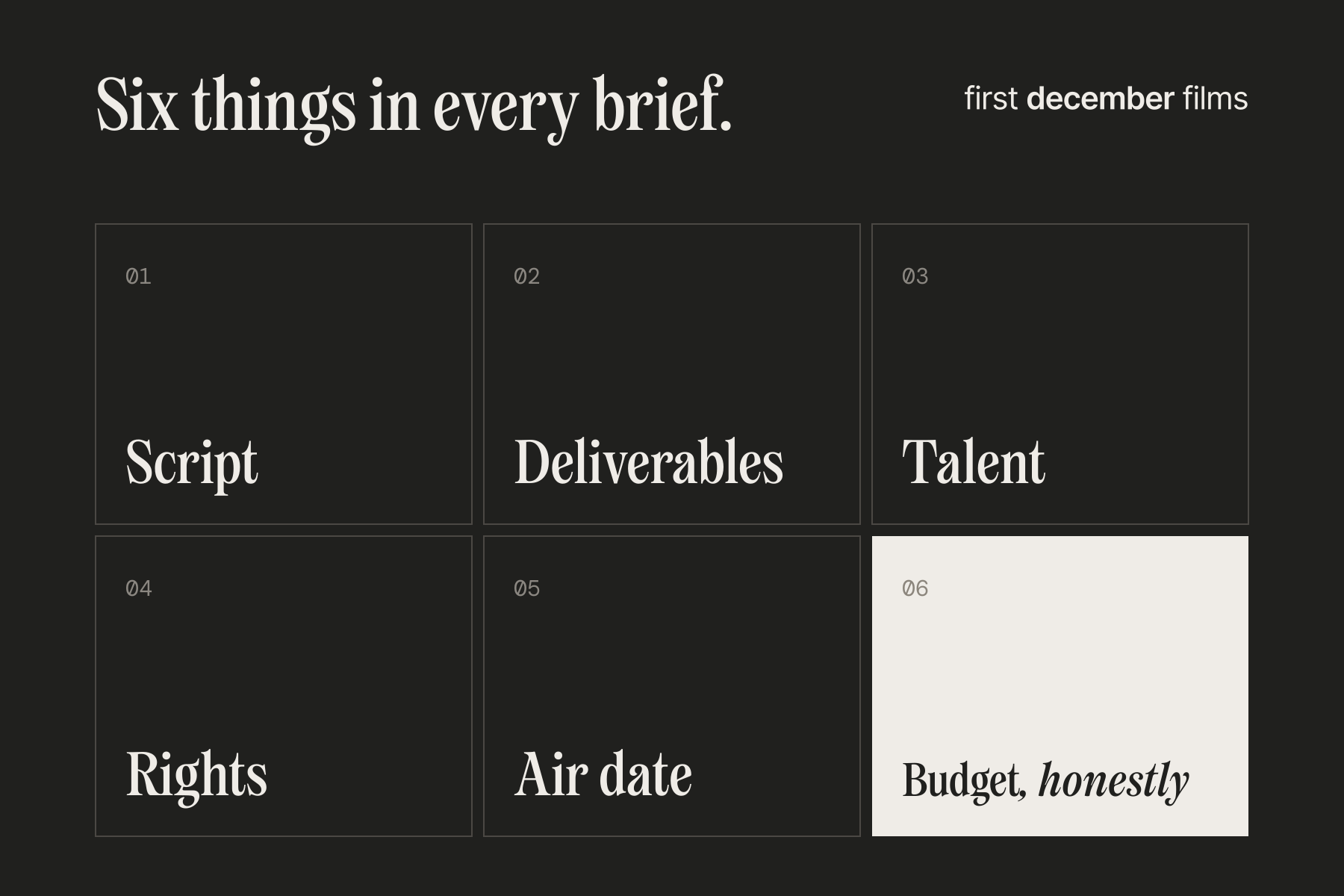
Send every production house the same six things and you will get quotes you can read side by side.
- The locked script or a clear creative direction, and the intended runtime
- Every deliverable, including cutdowns, aspect ratios and language versions
- Talent expectation, and whether a celebrity is confirmed or aspirational
- Usage rights: media, territory and term
- The air date, working backwards to the shoot window
- Your actual budget range
On that last one: brands often hide the budget, believing it protects them from being quoted to the ceiling. It does the opposite. A house that knows your number designs a film that can be made for it. A house that does not know your number designs a film you cannot afford, and then you both spend three weeks taking it apart.
The number that matters more than the budget
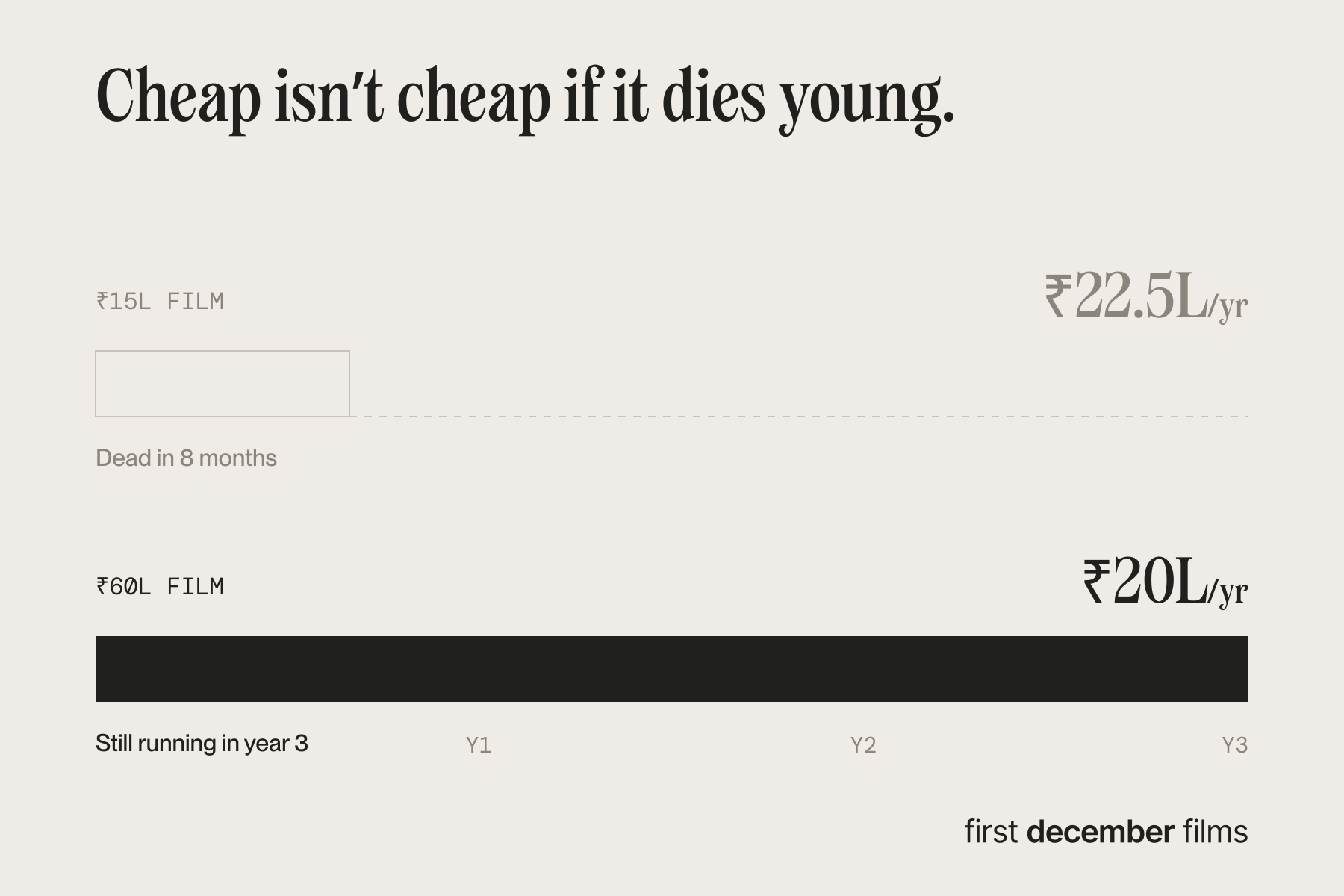
Cost per useful year.
A ₹15 lakh film that is replaced in eight months is more expensive than a ₹60 lakh film a brand still runs three years later. Advertising budgets are usually judged against the quarter they were spent in. Films should be judged against how long they hold.
The most expensive film is always the one nobody remembers.
First December Films is an advertising film production company in Mumbai. Our work has won more than 150 international creative awards, including Cannes Lions, D&AD and One Show Gold Pencils. If you have a script and a number and you want an honest read on whether they match, send us the brief.
How much does an ad film cost in India in 2026?
Between roughly 3 lakh and 3 crore rupees, depending on scope. A national TVC built to broadcast standard usually starts around 25 lakh. A film with a mainstream celebrity starts near 75 lakh in production cost alone, before the endorsement fee. Flagship campaign films sit between 1 crore and 2 crore.
How much does a 30-second TV commercial cost in India?
Duration is not the main cost driver. A 30-second TVC can cost 8 lakh or 1.5 crore depending on shoot days, cast, locations and post-production. Most Indian national 30-second TVCs are produced between 25 lakh and 60 lakh rupees.
Is ad film production cost the same as the advertising budget?
No. Production cost is what it takes to make the film. Media cost is what it takes to air it, and media is almost always the larger of the two. Budget them separately, or you end up with a film you cannot afford to run.
What percentage of an ad film budget goes to pre-production?
Usually 10 to 15 percent. It is the cheapest phase and the most valuable one. Cutting pre-production does not save money, it moves the cost onto the shoot day, where solving the same problem is far more expensive.
Why do quotes from different production houses vary so much?
Almost always because the scope differs, not the rate. Different shoot days, crew sizes, deliverables, usage terms, and whether colour grade, sound and 18 percent GST are inside or outside the number. Compare scope first, then compare price.
What hidden costs should brands budget for in an ad film?
Talent usage rights and term, music licensing, versioning and cutdowns, 18 percent GST, shoot overtime, location permissions and police coordination, and celebrity entourage costs including travel, security, hair, makeup and styling.
Does a bigger budget mean a better film?
Not automatically. Above about 8 lakh rupees, equipment is rarely the constraint. A higher budget buys preparation time, the right specialists, schedule room to do a take again, and a proper post-production pipeline. It buys the conditions in which craft can survive a shoot day.