The short answer. You are not choosing a production house. You are choosing a director. The production house decides whether the film gets made on time and on budget. The director decides what the film actually is. Judge the director on their treatment first, their reel second, and their questions third.
Most brands get this backwards. They shortlist companies, compare credentials, then find out three weeks later which director has been assigned to them. By that point the most important decision on the project has already been made, and they did not make it.
What a production house actually is
An advertising film production company is not a factory with a house style. It is a roster.
Every serious house in India and abroad represents a set of directors, each with a distinct sensibility, and puts the right one forward for the right brief. Some are in-house or exclusive. Some are represented for commercials while they work elsewhere on features. Some are brought in for a single project because their specific eye is what the script needs.
This is how the global houses work, and it is how the good Indian ones work too. When a brand says "we loved their reel", what they usually mean is that they loved three films by three different directors. Those three films are not a promise that the fourth will look like them.
So the first question to ask any production house is not what they have made. It is: who would direct this, and why that person.
The treatment is the real decision document
When a script goes out to production houses, each one responds with a director's treatment. It is usually a document of twenty to sixty pages, and it is the closest thing to a contract the creative process has.
A treatment sets out how the director sees the film. Tone. Casting direction. Where it is shot and why. How it is lit and shot. The pace of the edit. The sound. Reference frames. What the film is about underneath what it is about.
Read it properly, because it tells you more than any reel.
What a strong treatment has
- A point of view on the script, not a summary of it. If the treatment repeats your storyboard back to you in nicer fonts, the director has not engaged with it.
- A named central idea. Something the director has decided the film is really about. Every good film has one, and the director should be able to say it in a sentence.
- Specific casting language. "A face that has clearly done this work for twenty years" is useful. "Relatable, aspirational, 25 to 35" is a media brief, not a casting note.
- Craft decisions with reasons attached. Why this lens, why this palette, why this location, why handheld here and locked off there.
- Honesty about what is hard. The best treatments name the risk in the script and say how they intend to handle it.
What a weak treatment has
- Mood boards doing the work that thinking should be doing
- Reference films from a completely different budget tier, with no note on how the approach translates
- Adjectives instead of decisions. Cinematic. Premium. Emotional. Youthful.
- No mention of the product, the performance or the end frame
How to read a reel
A showreel proves a director can make pretty pictures. It does not prove they can solve your brief. Watch it looking for six things.
- Performance. Are the people in the frame behaving like people? This is the hardest thing in commercial filmmaking and the fastest way to separate directors. Beautiful images are widely available. A believable performance in twelve seconds is not.
- The product. Does the product appear as a subject or as an apology at the end? A director who can shoot a product without the film going flat is worth a premium.
- Signature versus range. Some directors have a language you can identify in four seconds. Others adapt completely. Neither is better. Decide which one your brief needs before you look.
- The unglamorous frames. Anyone can shoot a wide of a woman on a hill at sunrise. Look at the interior, the tabletop, the two-hander in an office. That is where craft shows.
- Consistency across the roster. Watch three films by the same director, not three films by the same house. If the level drops, you have found the truth.
- Edit rhythm. Directors have a pace. It is the least discussed and most durable part of their signature.
Ignore the client logos. Everyone's reel has good logos on it. The logo tells you who paid, not who was good.
Category experience: when it matters and when it is a trap
Brands ask for category experience by reflex. "Have they done automotive? Have they done beauty?"
It matters genuinely in three situations. Food and beverage, where appetite appeal is a technical craft with its own specialists. Automotive, where the rigs, the safety and the driving are a discipline. And anything with heavy VFX, where the director needs to shoot for a pipeline they understand.
Everywhere else, category experience is often the reason a film looks like every other film in its category. The director who has made forty telecom ads has forty telecom ads in their head. Sometimes the person you want is the one who has never made one.
The better question is not "have you done my category" but "have you solved this kind of problem". A film that has to make a boring product feel urgent is the same problem whether the product is a bank account or a bag of cement.
The director and the DOP are a pair
Ask who the director shoots with. Most directors have a cinematographer they have built a language with over years, and the difference between a director with their regular DOP and the same director with a stranger is visible on screen.
If the DOP is not available for your dates, that is a real piece of information about what your film will look like, and it should be raised before the award, not after.
Our own company was started by a cinematographer. Anup Kattukaran was the first Indian DOP to win a CLIO for cinematography, and the house was built on a fairly narrow belief: that execution is not the thing that comes after the idea, it is the thing the idea survives or dies by.
Six questions to ask before you commit
- Who directs this, and is that confirmed or proposed? Get the name in writing.
- What is your read on the script's weak point? A director who says the script is perfect has either not read it or will not fight for it.
- What would you change if you had one more shoot day, and what would you cut if you lost one? This tells you their priorities under pressure, which is the only condition that matters.
- Who is the DOP, and have you worked together before?
- How do you run the client on set? Some directors want the client in the monitor tent. Some want them nowhere near it. Both work. Mismatched expectations do not.
- What are you shooting immediately before and after us? A director coming off a three-week schedule into your one-day shoot is a different director.
Red flags
- The director is not named until after the project is awarded
- The treatment could be sent to any brand with the logo swapped
- The reference films are all from budgets ten times yours, with no explanation of the translation
- The director does not ask a single question about the product or the business
- Everything is agreed to instantly. A director with no opinion has no film
Why this decision compounds
A brand runs a good film for years. It becomes the reference every subsequent film is measured against, internally and by the market. Choosing the director is not a project decision, it is a positioning decision with a shoot date attached.
It is also, quietly, the reason this industry is organised the way it is. Agencies bid films to houses, but they choose directors. Awards are won by directors. Brands remember directors. The entire business runs on individual sensibility, which is why the roster, not the office, is what a production house really sells.
We have won a fair amount doing this. What has never once happened is a film turning out better than the person directing it.
Atul Kattukaran is a Partner and Director at First December Films. He has won Cannes Lions in 2014, 2016 and 2017, along with D&AD, CLIO, One Show and Spikes Asia awards, and was the first Indian named in the Cannes Lions Global Creativity Report's list of the world's top ten TVC directors.
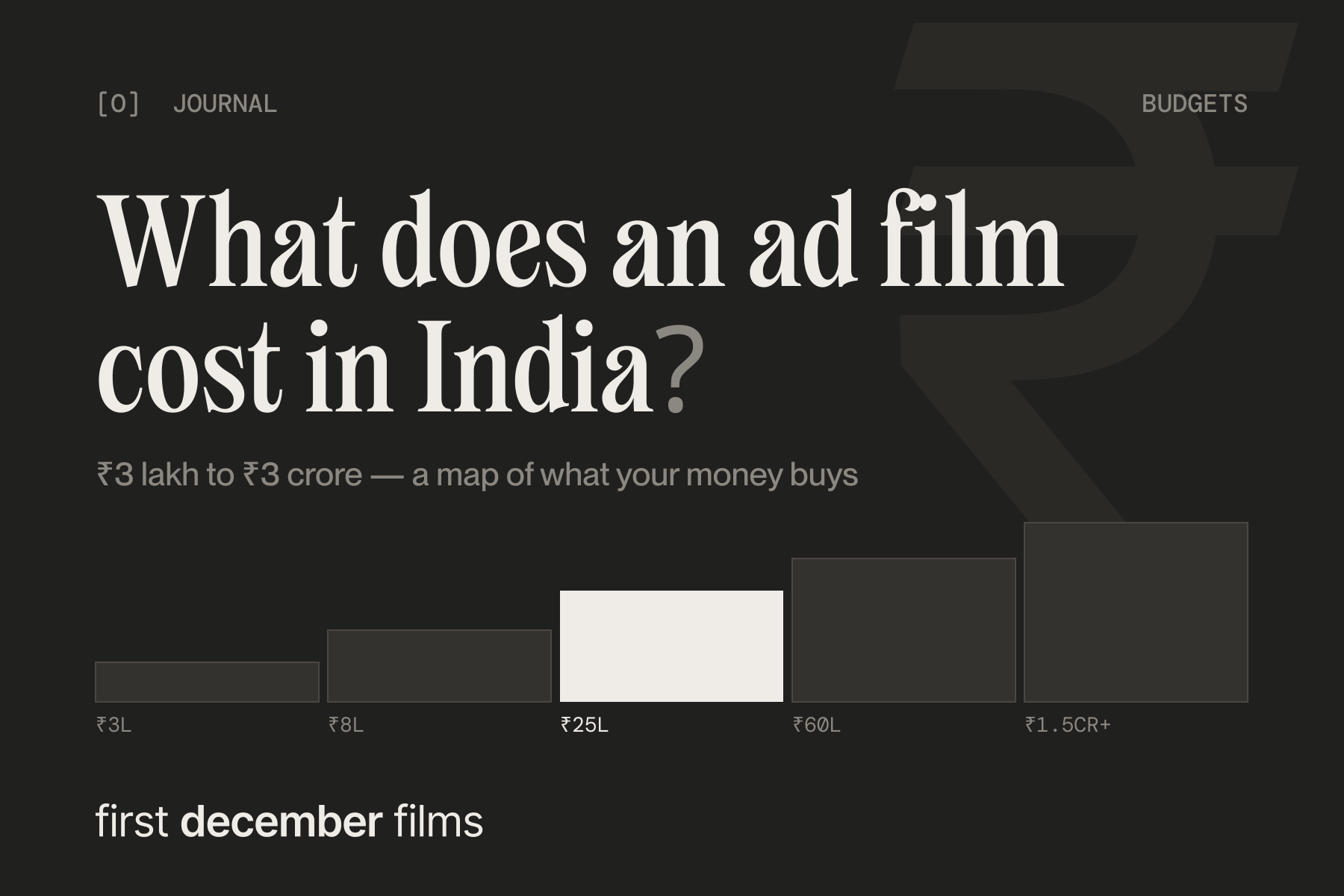
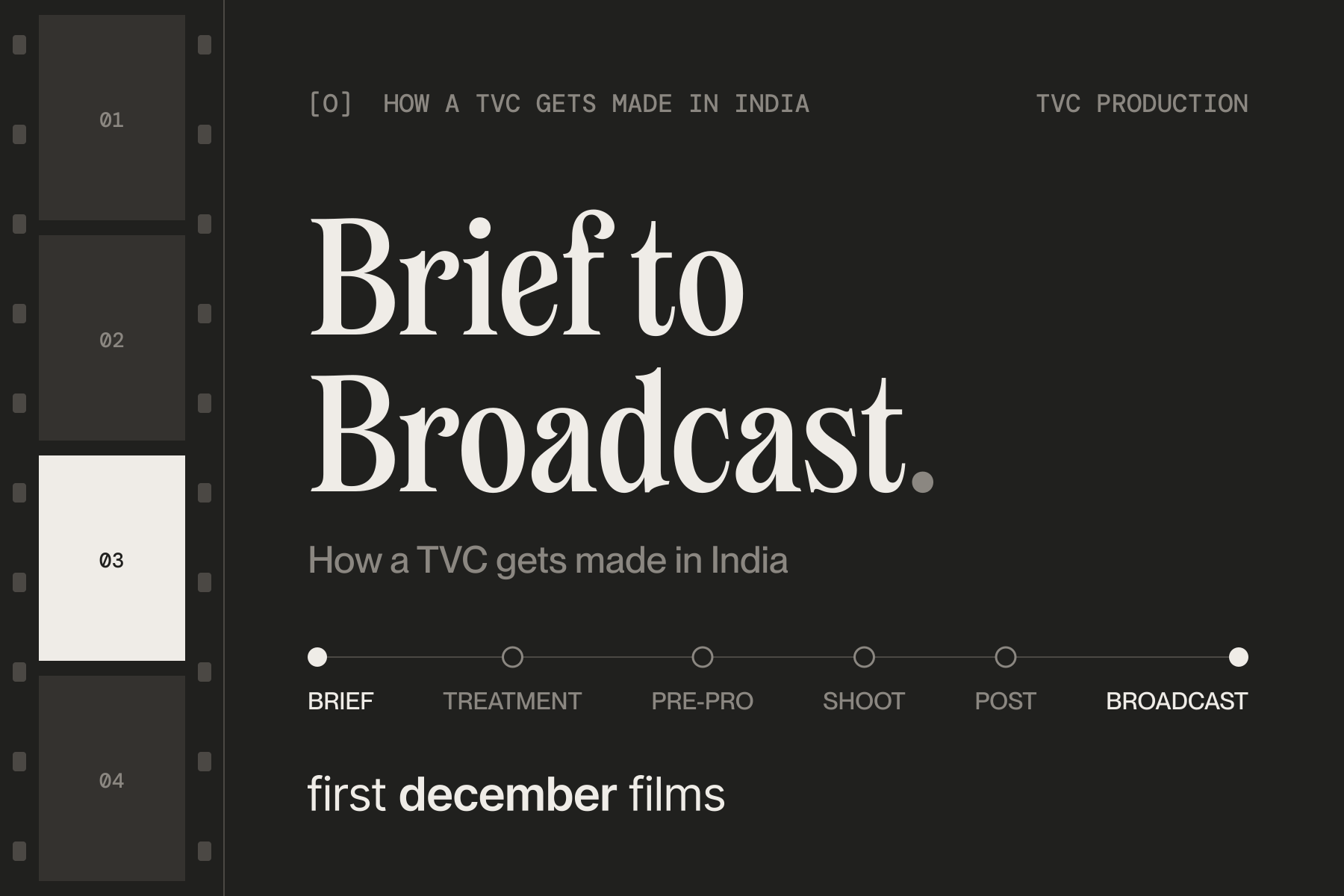
See the directors we represent, browse the work, or send us a script. Related reading: what an ad film actually costs in India and how a TVC gets made, brief to broadcast.
How do I choose a director for my brand’s ad film?
Judge the director’s treatment first, their showreel second, and the questions they ask third. The treatment shows whether they have a point of view on your script. The reel shows craft. The questions show whether they understand the business problem behind the brief.
What is a director’s treatment?
A document, usually twenty to sixty pages, in which the director sets out how they see the film: tone, casting direction, locations, camera and lighting approach, edit pace, sound and visual references. It is the closest thing advertising has to a creative contract, and it is the main basis on which a film is awarded.
Does a production house have its own directors?
Serious production houses represent a roster rather than having one house style. Some directors are in-house or exclusive, some are represented for commercials while working elsewhere, and some are brought in for a specific project. Always ask which director is proposed for your film, and get the name in writing.
Does an ad film director need experience in my product category?
It matters most in food and beverage, automotive, and VFX-heavy work, where the craft is genuinely technical. Elsewhere, category experience often produces films that look like the rest of the category. The better question is whether the director has solved the same kind of problem before.
What should I look for in a director’s showreel?
Performance quality, how the product is handled, whether the director has a signature or range, the unglamorous frames such as interiors and tabletop work, consistency across three films by the same director rather than three by the same house, and edit rhythm. Ignore the client logos.
Why does the cinematographer matter when choosing a director?
Most directors have a DOP they have built a visual language with over years, and the same director with an unfamiliar cinematographer produces a visibly different film. Ask who the DOP is and whether they are available for your dates before the project is awarded, not after.
What are the warning signs when evaluating an ad film director?
The director is not named until after the project is awarded, the treatment could be sent to any brand with the logo swapped, references come from budgets ten times yours with no explanation of the translation, no questions are asked about the product or the business, and everything you say is agreed to instantly.