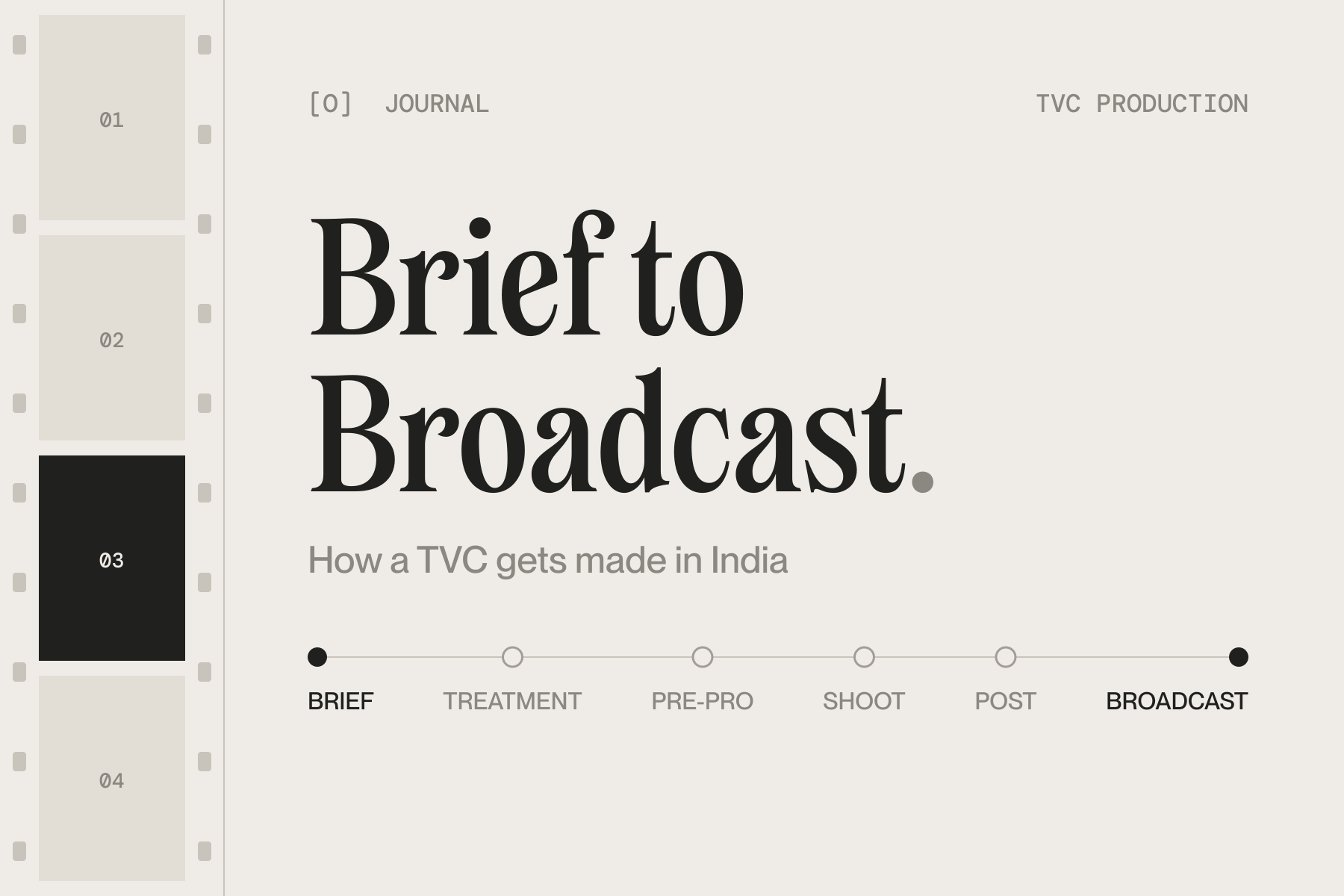
The short answer. A national TVC in India takes six to ten weeks from approved script to delivered master. Roughly two to four weeks of bidding and pre-production, one to three shoot days, and two to four weeks of post. Anything with a celebrity, heavy VFX, international locations or more than four language versions runs longer. The shoot is the shortest part of the process and the most expensive part to improvise.
Most brand teams have never been on a set. That is normal, and it is not a problem, but it means the process happens to them rather than being run by them. Here is the whole thing, stage by stage, including the parts nobody explains.
Stage 1: Brief and script
The creative agency, or the brand's in-house team, develops the idea and writes the script. A storyboard usually follows.
This is where cost is decided. Not at the quote. Three locations, a night exterior, a crowd and a child actor are expensive words on a page, and no amount of clever production can make them cheap later. If there is a budget ceiling, it belongs in the room during scripting.
Typical duration: one to four weeks, depending entirely on the approval chain.
Stage 2: The bid
The agency producer, or the brand's procurement team, sends the same script to two or three production companies. Internationally this is called the triple bid. In India it is often two, sometimes one for a house with an existing relationship.
Each house responds with two documents.
- The director's treatment. How the assigned director sees the film. This is the creative decision.
- The line-itemised budget. Crew, cast, equipment, locations, art, post, versioning, contingency. This is the commercial decision.
Treatment writing usually takes five to ten working days, sometimes compressed to seventy-two hours for urgent work. That compression is visible in the result more often than anyone admits.
How to compare bids properly. Line up the scope before you line up the numbers. Check shoot days, crew size, whether the grade and sound are included, how many deliverables are covered, what usage term the talent quote assumes, and whether GST is inside or outside the number. Most "cheaper" bids are smaller bids.
Typical duration: one to three weeks including the award decision.
Stage 3: The PPM, which is the meeting that decides the film
Once a house is awarded, the pre-production meeting happens. Everyone is in the room: brand, agency, director, producer, DOP, art director, stylist.
Every decision is locked here. Final cast. Final locations. Wardrobe. Art references. Shot list. The schedule, hour by hour. Product handling. What the end frame looks like.
The PPM exists for one reason: to move every argument off the shoot day, where an argument costs a full crew day. A film that is properly PPM'd is a film that gets shot. A film where the client sees the wardrobe for the first time on set is a film that goes over.
If you take one thing from this entire article: attend the PPM, and bring the person who has final approval. Sending someone who has to check with someone else is the single most reliable way to lose a shoot day.
Stage 4: Pre-production
Between the award and the shoot, the production team is doing all of this in parallel.
- Casting. Briefs out, auditions, callbacks, client approval, contracts. Celebrity casting runs on the celebrity's calendar, and that calendar dictates your schedule, not the other way around.
- Recce. Location scouting and the technical recce, where the DOP and gaffer work out what the space can actually do at the hour you are shooting.
- Permissions. Location permits, police coordination, society or authority approvals. In Mumbai this is a discipline of its own.
- Art and wardrobe. Set construction, prop sourcing, costume fittings. The longest lead time on most shoots.
- Crewing and equipment. Camera and lens package, lighting and grip, specialist units.
- Schedule and call sheet. The final plan, distributed the night before, that everyone works from.
Typical duration: one to three weeks for standard TVCs, longer with celebrities, built sets or international locations.
Stage 5: The shoot
One to three days for most national TVCs. Multi-film series shot in a single schedule can run five days or more.
A shoot day is a logistics operation with a creative act inside it. Crew size runs from about forty on a controlled single-location film to well over a hundred on a large one. The unit moves on a schedule built around light, talent availability and the number of setups.
Two things brands should know about set etiquette.
- Feedback goes through the agency producer or the EP, not directly to the crew. This is not gatekeeping. A director running a set is holding twelve threads at once, and a note that arrives from three directions at once costs a take.
- Approve at the monitor, then commit. A shot approved on set and questioned in the edit is a reshoot conversation, and reshoots are the most expensive line item in advertising.
Stage 6: Post-production
The phase most consistently underestimated. On a well-run film it takes longer than everything before it.
- Offline edit. Footage reviewed, takes selected, rough cut assembled, then refined to a fine cut. Rough assembly on a 30-second film is often a day. Getting to a locked cut, through rounds of agency and brand feedback, takes considerably longer.
- Lock. The edit is frozen. Everything downstream depends on this, and reopening it after the grade has started is expensive.
- VFX and clean-up. From wire removal and set extension to full CG. Timeline depends entirely on scope.
- Colour grade. Where the film gets its final look. Done by a colourist on a calibrated setup, not by the editor.
- Sound. Dialogue clean-up, dubbing, foley, sound design, music, final mix. Original music adds composition time. Licensed music adds negotiation time.
- Conform and delivery. Masters built to each platform's technical spec, plus every cutdown and language version.
Typical duration: two to four weeks standard, four to eight weeks for VFX-heavy or multi-version work.
Stage 7: Compliance and delivery in India
This stage catches brand teams out constantly, because it is genuinely specific to the Indian market.
- Television advertising is not pre-censored in India. There is no board that clears your TVC before it airs. Instead, ads carried on cable and satellite television must conform to the Advertising Code under Rule 7 of the Cable Television Networks Rules, 1994, which incorporates the ASCI Code by reference. Compliance is your responsibility, and non-compliance is dealt with after the fact.
- A Self-Declaration Certificate is required. Following a Supreme Court directive in 2024, advertisers must file a self-declaration certificate confirming the ad complies with the applicable codes. For television and radio this is filed on the Ministry of Information and Broadcasting's Broadcast Seva portal, and for print and digital through the Press Council of India's portal. Broadcasters ask for it. Budget time for it.
- Cinema requires CBFC certification. Anything publicly exhibited in a cinema falls under the Cinematograph Act and needs certification from the Central Board of Film Certification. If your campaign includes a cinema cut, start this early.
- Broadcaster technical specs. Every channel and platform has its own delivery specification. Loudness, frame rate, safe areas, file format. Getting a master rejected on a technical spec three days before air is avoidable and common.
- Substantiation. Any objectively verifiable claim in the film should have documentation behind it before it airs, not after a complaint.
The realistic timeline, end to end
- Fast digital film, single location, no celebrity: three to four weeks
- Standard national TVC: six to ten weeks from approved script to master
- Celebrity campaign: eight to fourteen weeks, driven by talent dates rather than production
- VFX-led or international shoot: twelve to twenty weeks
- Multi-film series shot in one schedule: add two to four weeks to post, not to the shoot
Work backwards from the air date, and add two weeks. Festive windows are the exception that punishes optimism. A Diwali or IPL campaign that misses its window has lost most of its value regardless of how good the film is.
Where projects actually go wrong
In our experience it is almost never the shoot. It is one of five things.
- Late approvals. Casting, location or wardrobe sign-off arriving days late compresses everything downstream. This is the most common cause of overruns in Indian advertising.
- A decision-maker who was not in the PPM. Opinions that arrive after the film is shot are the most expensive opinions in the business.
- Scope added after lock. An extra language, a new cutdown, a different end card. Each has a cost and a timeline.
- A script priced for a budget it was never going to fit. Fixed at the script stage or not at all.
- Compression of pre-production to protect the air date. This moves risk onto the shoot day, where it is five times more expensive to solve.
Almost every one of these is a calendar problem wearing a creative costume.
What a good production partner is actually doing
Making the film look good is the visible half. The other half is making sure the day nothing goes wrong is also the day the client never finds out how close it came.
That is the whole job. The awards are for the first half. The repeat business is for the second.
Imran Patel is Senior Producer at First December Films, where he runs budgeting, scheduling and on-shoot production across national and international campaigns. First December Films is an advertising film production company in Mumbai whose work has won more than 150 international creative awards.
Send us a script and a date at first december films contact, or see the work. Related reading: what an ad film actually costs in India and how to choose the right director for your film.
How long does it take to make a TVC in India?
Six to ten weeks from approved script to delivered master for a standard national TVC: roughly two to four weeks of bidding and pre-production, one to three shoot days, and two to four weeks of post-production. Celebrity campaigns, VFX-led films and international shoots take longer.
What are the stages of ad film production?
Brief and script, the bid, the pre-production meeting, pre-production, the shoot, post-production, and compliance and delivery. The shoot is the shortest stage in the process and the most expensive one to improvise.
What is a triple bid in advertising film production?
The agency sends the same script to two or three production companies, each of which responds with a director’s treatment and a line-itemised budget. The agency and brand compare creative approach and cost side by side before awarding the film. In India the process often runs as a two-way bid.
What is a PPM in ad film production?
The pre-production meeting, where brand, agency, director, producer, DOP, art director and stylist lock every decision before the shoot: cast, locations, wardrobe, art references, shot list and schedule. Bring the person with final approval. Decisions deferred past the PPM get made on set, where they cost a full crew day.
Do TV commercials need certification in India?
Television advertising is not pre-censored in India, but ads carried on cable and satellite television must comply with the Advertising Code under Rule 7 of the Cable Television Networks Rules, 1994, which incorporates the ASCI Code. Advertisers must also file a Self-Declaration Certificate, submitted on the Ministry of Information and Broadcasting’s Broadcast Seva portal for television and radio. Ads screened in cinemas require CBFC certification under the Cinematograph Act.
Why do ad film projects go over budget or over schedule?
Usually late approvals, a decision-maker who missed the PPM, scope added after the edit is locked, a script priced for a budget it was never going to fit, or pre-production compressed to protect the air date. Almost every overrun is a calendar problem wearing a creative costume.
How long does post-production take on a TV commercial?
Two to four weeks for a standard TVC, covering offline edit, lock, VFX, colour grade, sound and delivery. VFX-heavy or multi-language work runs four to eight weeks. Post is the most consistently underestimated phase of the process.